


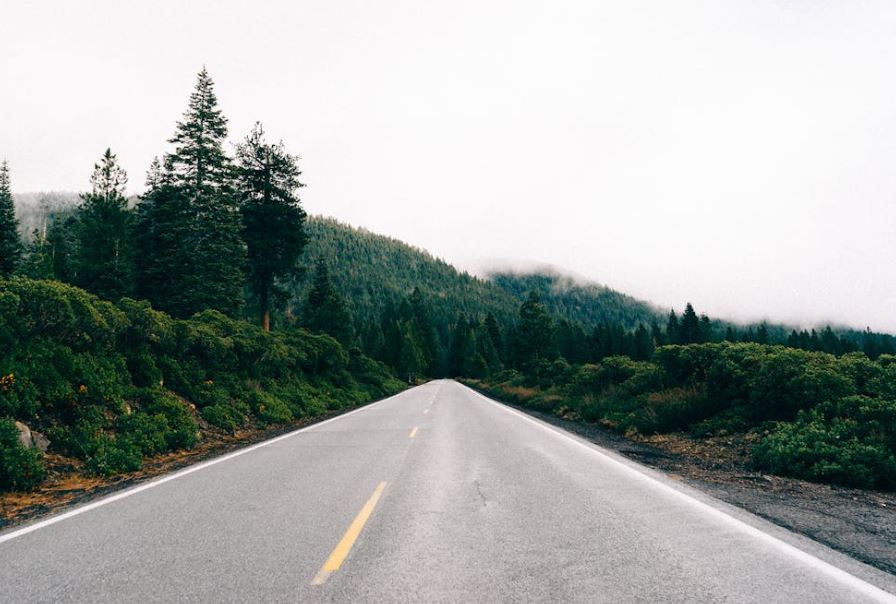
The Solitude of the Open Road: What Driving Alone Across America Really Teaches You
Solo road trips have quietly become one of the defining acts of the American 2020s. Not the Instagram version — not the perfectly curated van-life content or the aesthetic desert photos. The real version, where you eat gas station sushi at 11pm and have entire conversations with yourself and occasionally cry for reasons you can’t immediately explain. That version. According to Grand View Research, solo travel globally generated an estimated $482.34 billion in 2024, with projections suggesting it’ll hit $1.07 trillion by 2030 — a 14.3% compound annual growth rate. And domestically? Solo travelers generated over 64% of that global revenue closer to home, not abroad. Americans aren’t flying to Bali for their solitude. They’re driving to it.
What’s driving this — pun genuinely intended — is more complicated than wanderlust. It’s burnout. It’s a post-pandemic reckoning with how we’d been spending our time and who we’d been spending it with. It’s the particular American restlessness that has always expressed itself best through movement. And in 2024, the American Psychological Association reported that 65% of U.S. adults felt significant or high stress about money and the economy. That’s not a number that makes people want to stay put.
But this piece isn’t a pitch for solo travel. It’s something more honest than that — an attempt to actually reckon with what it means to be alone on the road, what it gives you, what it takes from you, and why millions of Americans keep doing it anyway.
The Road Has Always Been Our Therapy
There’s something almost mythological about the American relationship with driving. Kerouac made it literary. Route 66 made it iconic. And somewhere along the way, the road trip became less about the destination and more about the psychological permission slip it offered — the freedom to be no one in particular for a while.
That tradition didn’t emerge from nowhere. The U.S. built its identity around movement, migration, and the belief that somewhere slightly west of where you are now, things might be better. For most of the 20th century, the car was the primary technology of that hope. Personal vehicle use remains the dominant mode of travel for Americans, according to the U.S. Bureau of Transportation Statistics, and road-based tourism has shown remarkable resilience even as airline travel fluctuates with prices and post-pandemic unpredictability.
What’s shifted in the last few years is who’s making these trips — and why. The 2023 Pew Research report on pandemic life changes found that 72% of adults made at least one major life adjustment since COVID — changing where they live, how they work, or what they prioritize. For a meaningful chunk of Americans, that adjustment included rethinking the relationship between stillness and motion. Specifically: some people discovered that the stillness of their apartment during lockdown was suffocating, and the motion of the open highway was one of the few antidotes that felt both affordable and genuinely restorative.
National parks absorbed a lot of that energy. In 2024, U.S. national parks received more than 325 million recreational visits, continuing a post-pandemic surge that shows no real signs of cooling, per the National Park Service. Most of those visitors got there by car. Many got there alone.
What “Alone on the Road” Actually Feels Like
There’s a gap between how solo road trips are marketed and how they actually unfold. The marketing version involves golden hour lighting, a thermos of good coffee, and a sense of serene self-discovery that arrives more or less on schedule. The actual version is messier, stranger, and — for most people who stick with it — considerably more valuable.
In the first few hours, most people feel the relief. The physical sensation of leaving something behind. Stress levels drop when the familiar skyline shrinks in the rearview. Then somewhere around hour four or five, a different experience sets in. With nothing to distract you — no meeting, no group itinerary, no social obligation — your mind starts doing something it rarely gets to do in regular life: it starts actually processing. Not performing processing. Not journaling about processing. Actually sitting with things.
A 2021 peer-reviewed study in Environment and Behavior found that chosen solitude — as distinct from loneliness imposed on someone — consistently improves subjective well-being. The key word is chosen. When you decide to be alone, the brain registers it differently than isolation that feels forced. The open road offers a specific form of this: you chose to be here. The silence is yours. That psychological distinction matters more than it might seem.
At the same time, solo travel has real psychological demands that the wellness-content industry tends to soft-pedal. Long stretches of solitude surface whatever you’ve been avoiding. Anxiety about finances. Unresolved grief. The quiet dissatisfaction you’d been too busy to fully hear. Around mile 400 of a solo drive through the Southwest, there is no inbox to check, no meeting to prep for, no friend to text. It’s just you and whatever you’ve been carrying. For people who aren’t used to that, it can feel less like freedom and more like being trapped with a difficult roommate — except that roommate is you.
The RAND Corporation’s review of travel and well-being found links between travel and improved mental health outcomes, but with an important caveat: the benefits are most pronounced when travel involves genuine novelty and an element of challenge, not just escape. That distinction explains why some people return from solo road trips feeling genuinely transformed, and others return exhausted and vaguely disappointed. The road doesn’t fix anything. It surfaces everything, and what you do with that surfacing is up to you.
The People Who Actually Go — And Why
In 2024, 76% of Millennial and Gen Z travelers planned at least one solo trip, according to the American Express Global Business Travel 2024 Trends Report. Women represented 54.4% of solo travel industry revenue that same year — a significant majority, and a number that challenges the default image of the lone male wanderer on the highway.
The motivations these travelers cite are worth paying attention to. Self-discovery, wellness, the desire to set their own pace. But dig a layer deeper and a more complicated picture emerges — one that looks a lot like the real financial and emotional pressures Americans are navigating right now.
Take the story of @FinFreedom414, who shared something on social media that stuck with us at B Red Magazine when we came across it in February 2026. He wrote about watching coworkers in their 50s still carrying student loan stress and bill anxiety, and deciding at 18 that he refused to let that be his life. His solution involved taking risks, losing money, and learning the hard way — but also investing consistently and building something quietly over time. What’s relevant here isn’t the financial specifics; it’s the impulse. The decision to step off the default track and figure something out on your own terms. That same energy drives a lot of solo road trips. It’s not really about the road. It’s about the refusal to keep operating on autopilot.
Or consider @eeelistar’s story — bartending, dog-sitting, burning through savings on bad bets, moving in with parents, eventually rebuilding. Psychologically, what made the difference wasn’t a sudden windfall. It was the willingness to keep going through a series of genuinely humbling circumstances. People who’ve been through that kind of tumble tend to relate to the open road differently than those who haven’t. When you’ve already hit bottom a few times, driving alone through empty landscape doesn’t feel isolating — it feels honest. It matches the internal terrain.
The Pew Research Center’s 2023 findings on self-care and mental health show that Americans are increasingly framing personal well-being as something they need to actively build and protect — not something that just happens when life is going fine. Solo travel fits neatly into that framework. It’s expensive enough to feel meaningful but accessible enough that you don’t need a high income or a lot of vacation days. It requires you to be self-reliant without being punishing. And it delivers the kind of experiential satisfaction that research consistently suggests outlasts material purchases. A 2020 study in the Journal of Consumer Psychology found that about 60% of Americans say experiences make them happier than material possessions — and the effect holds longer over time.
The Parts Nobody Romanticizes
Here’s where we want to be careful at B Red Magazine, because the solo travel conversation has a tendency to drift toward a kind of soft propaganda — the idea that spending enough time alone on a scenic highway will restructure your psyche and clarify your purpose. It can. It sometimes does. But it doesn’t always, and pretending otherwise does a disservice to people who go in with high expectations and come back feeling confused or worse.
The Behavioral Scientist published a piece in 2022 making exactly this argument — that travel as self-care has real limits, and that extended road trips cannot fix structural burnout or deep psychological wounds. They’re right. Driving across Montana doesn’t resolve a toxic workplace. It doesn’t repair a fractured relationship or address the anxiety that’s been building for three years. What it can do is create enough space that you can actually hear yourself think clearly about those things. Whether you act on that clarity when you return is a different question entirely.
There are also the practical realities that get filtered out of the beautiful Instagram version. The Bureau of Labor Statistics reported that the U.S. Consumer Price Index rose approximately 3.4% over the twelve months ending in December 2024. Gas costs more. Motels cost more. Food costs more. For Americans already feeling financial pressure — and in 2023, only 72% of adults said they were doing “okay” financially, down from 78% in 2021, per the Federal Reserve’s report on household well-being — the economics of an extended road trip require honest planning, not wishful thinking.
The New York Times ran a piece in 2023 specifically examining the backlash to solo travel culture, noting that the glorification of going alone tends to erase questions of safety (especially for women traveling in remote areas), privilege (not everyone can take time off and afford the gas), and community (some critics argue that valorizing solitude contributes to a broader cultural atomization that isn’t actually healthy). These are real critiques. Harvard Business Review made a related point in 2022, arguing that dropping everything to travel carries genuine career and financial risks that the “just go” messaging tends to minimize.
None of this means solo road trips aren’t worth taking. It means they’re worth taking with clear eyes.
What the Miles Actually Give You
If we set aside both the romanticized version and the reflexive skepticism, what does the evidence actually suggest about what people gain from extended time alone on the road?
The clearest benefit is perspective through distance — not metaphorical distance, but literal physical distance from the circumstances that have been generating your stress. There’s something about the act of moving away from a place, watching it recede in the mirror, that the brain processes as genuine relief. Novelty in the scenery forces the mind to engage with the present rather than looping on past or future concerns. And the rhythm of long-distance driving — monotonous enough to allow deep thinking, engaging enough to prevent dissociation — creates a mental state that’s genuinely difficult to replicate any other way.
@TraderMagus, whose story we came across in our reading, described his financial journey with a line that resonates far beyond money: “slow and steady wins the race.” He was talking about savings and investing. But the mentality — the willingness to grind without expecting immediate transformation — applies to what solo travel actually demands of you. You don’t get the clarity on day one. You might not get it at all if you’re running from something specific and fast enough. The miles work slowly. So does the silence.
What consistently comes through in accounts from people who’ve done long solo drives — not the highlight-reel posts, but the honest reflections weeks later — is a sense of recalibration. A clearer read on what actually matters versus what had been mattering because it was urgent or visible or expected. @AaliyahJay put it simply when she described the moment that changed everything for her: “my mindset.” Not a windfall. Not a strategy. A shift in how she was oriented toward her own life. The open road, at its best, creates enough quiet to let that kind of shift happen.
Before You Go: Thinking It Through Honestly
If you’re genuinely considering a solo road trip — not the Instagram version, the real one — a few things are worth thinking through before you load the car.
First, know what you’re actually trying to do. There’s a difference between wanting space to think, wanting adventure, wanting to prove something to yourself, and wanting to escape something specific. All of those are legitimate, but they call for different approaches. A weekend drive through a national park serves different purposes than two weeks alone on back roads with no fixed itinerary. Be honest about which one you need.
Second, take the finances seriously. Build a real budget — gas at current prices, lodging, food, a buffer for mechanical issues. If you’re in a financially stretched season of life, the last thing a restorative trip needs is to become a source of new anxiety. @themarkethustle said something that applies here: a few years of real discipline changes your entire life and ironically opens up more doors to actually enjoy it. The framing works for travel too. Planned, affordable, genuinely possible trips tend to deliver more than impulsive ones driven by fantasy rather than logistics.
Third, don’t expect the road to do work that belongs to you. If there’s something you’ve been avoiding thinking about — a decision that needs making, grief that needs processing, an honest conversation with yourself about your direction — the miles will surface it. That’s actually a feature. But recognize it as an opportunity, not a crisis, when it happens.
Finally, pay attention to what the solitude is showing you — and then do something with it when you get back. @ZeroHedge_ talked about the mentor who changed his trajectory, a connection he made because he sought out someone who knew more than he did. Road trips at their best function similarly: they don’t give you answers, but they clarify the questions well enough that you can actually look for answers in the right places. The work happens after the driving stops.
The Road Doesn’t Fix You. It Shows You.
There’s something quietly radical about choosing to be alone in a moving vehicle for an extended period of time in an era that’s structured almost entirely around constant stimulation, connectivity, and the performance of being fine. The open road, at its most honest, strips all of that away. What’s left is just you, the miles, and the question of what you actually think about your own life when nobody’s watching.
That’s not always comfortable. For a lot of people, the first long stretch of genuine highway solitude is more unsettling than peaceful. But discomfort and damage aren’t the same thing, and the research, the stories, and the sheer numbers of Americans choosing to make these trips suggests something real is happening out there on the asphalt — something that meets a need that Instagram and streaming services and packed social calendars don’t seem to be satisfying.
The solo travel market will keep growing. More Americans will keep heading to national parks in their own cars, taking the long way home, sitting with the silence longer than is strictly necessary. Some of them will come back transformed in visible ways. Most will come back looking exactly the same and feeling subtly, meaningfully different — clearer, or calmer, or simply a little more honest with themselves about something.
That seems like enough. Honestly, for most of us, that’s exactly what we were after.
Frequently Asked Questions
More from B Red Magazine
At B Red Magazine, we keep tracking the stories that shape how Americans actually live — not the curated version, the real one. If this piece resonated, there’s more where it came from. Follow along, subscribe, and explore what we’re covering at bredmagazine.com.