


The Capsule Wardrobe: Elegance Through Restraint
In an American consumer landscape defined by abundance—where the average household owns more clothing than at any point in history—a quiet counter-movement has taken root. The capsule wardrobe, with its deliberate limits and coordinated simplicity, promises not just a tidier closet but a kind of elegance born from restraint itself. Yet as we at B Red Magazine have observed through rigorous examination of recent scholarship and cultural trends, this minimalist ideal is far more complex than Instagram’s neutral-palette perfection suggests. It is simultaneously a sustainable practice, a psychological strategy, a gendered performance, and a marker of class privilege.
The promise is seductive: pare down to thirty-three carefully chosen pieces, and discover freedom, creativity, and a refined personal style that transcends fashion’s relentless churn. But who gets to access this elegant simplicity? And what does “restraint” really mean in a culture built on acquisition?
The Intellectual Foundations of Less
The capsule wardrobe concept is deceptively straightforward. Academic research defines it as “creating and dressing with limited clothing items” in ways that emphasize coordination, quality, and sustainability over volume and trend-following. A University of Minnesota study examining personal experiences with capsule wardrobes describes the practice as one where participants deliberately restrict their active wardrobe to foster creativity and reduce consumption (University of Minnesota, 2019).
What emerges from the empirical literature is not a single formula but a family of practices united by intentional reduction. Researchers Martin and Woodhead, writing in the peer-reviewed geography journal Area, characterize minimalist fashion as promoting “a capsule wardrobe of a bare minimum of fashion essentials with few, quality garments that co-ordinate,” with emphasis placed on “simple, timeless and classic fashion looks, as opposed to fast fashion trends” (Martin & Woodhead, 2022).
This description immediately signals something crucial: capsule wardrobes are defined as much by what they reject as by what they contain. They stand in opposition to fast fashion’s velocity, social media’s pressure for constant novelty, and American consumer culture’s equation of more with better. In this framework, elegance is not additive. It is subtractive, carved from discipline rather than abundance.
Project 333 and the Architecture of Constraint
If capsule wardrobes represent a philosophy, minimalist fashion challenges provide the experimental laboratory. The most documented of these is Project 333, in which participants commit to wearing only thirty-three items over a three-month period. As academic analyses note, these challenges function as “experiments in voluntary reduction of apparel consumption,” serving as potential milestones toward permanently reduced fashion consumption (Martin & Woodhead, 2022).
The numerical constraint is deliberately provocative. Thirty-three items must cover work, leisure, exercise, weather variation, and social obligations. This forced economy of means compels participants to think systematically about versatility, layering, and coordination in ways that unlimited choice does not. The research suggests that rather than producing monotony, such constraints can actually encourage creativity in outfit combination, as wearers learn to extract maximum variety from minimal inputs.
The psychological shift here mirrors what we at B Red Magazine have explored in adjacent domains of American life: the idea that constraints can paradoxically produce freedom. Just as compound interest rewards patience over flashy returns, the capsule wardrobe rewards compositional skill over acquisition. Both represent forms of delayed gratification and strategic restraint increasingly countercultural in American consumer society.
The American Psychology of Wardrobe Minimalism
The University of Minnesota study provides valuable empirical insight into what actually happens when people adopt capsule wardrobes. Using pre- and post-interviews along with daily journals, researchers documented both the benefits and limitations participants perceived during their capsule wardrobe experiments (University of Minnesota, 2019).
Reported benefits clustered around three domains. First, practical efficiency: easier morning routines, reduced decision fatigue, less time spent shopping or managing clothing. Second, psychological coherence: a stronger sense of personal style, greater alignment between values and consumption patterns, and what participants described as feeling more “themselves.” Third, creative satisfaction: the challenge of working within constraints proved unexpectedly engaging, prompting wearers to discover new combinations and appreciate the versatility of well-chosen pieces.
Yet the study also documented limitations that complicate the aspirational narrative. Some participants experienced social anxiety about outfit repetition, particularly in professional or social settings where visible consumption signals status. Others found the constraints boring or restrictive, especially when seasons changed or special occasions arose. The experiment revealed that capsule wardrobes require not just careful curation but also a degree of social confidence—the assurance that you can wear the same well-made blazer three times in one week without diminishing your professional credibility.
This is where American cultural context becomes critical. In a society where personal reinvention and visible success are deeply valued, repeating outfits can feel like stagnation or poverty rather than intentional elegance. The capsule wardrobe thus demands a certain cultural fluency: the ability to signal that your restraint is chosen, sophisticated, even virtuous—not imposed by economic necessity.
Sustainability, Virtue, and the Moral Weight of Minimalism
Much of the academic and popular enthusiasm for capsule wardrobes centers on their environmental promise. By reducing the number of garments purchased, capsule wardrobes theoretically decrease the devastating impacts of fashion production: water pollution, carbon emissions, textile waste, and exploitative labor practices. The voluntary reduction framing positions capsule practitioners as ethically advanced consumers, questioning “the normalised fast fashion and social media-driven discourses” that drive overconsumption (Martin & Woodhead, 2022).
For many American adopters, this ethical dimension is inseparable from the aesthetic one. Elegance through restraint becomes not just a style choice but a moral position—a visible rejection of waste, excess, and the exploitation embedded in $8 fashion. The capsule wardrobe signals thoughtfulness, responsibility, and a kind of evolved taste that transcends trend cycles.
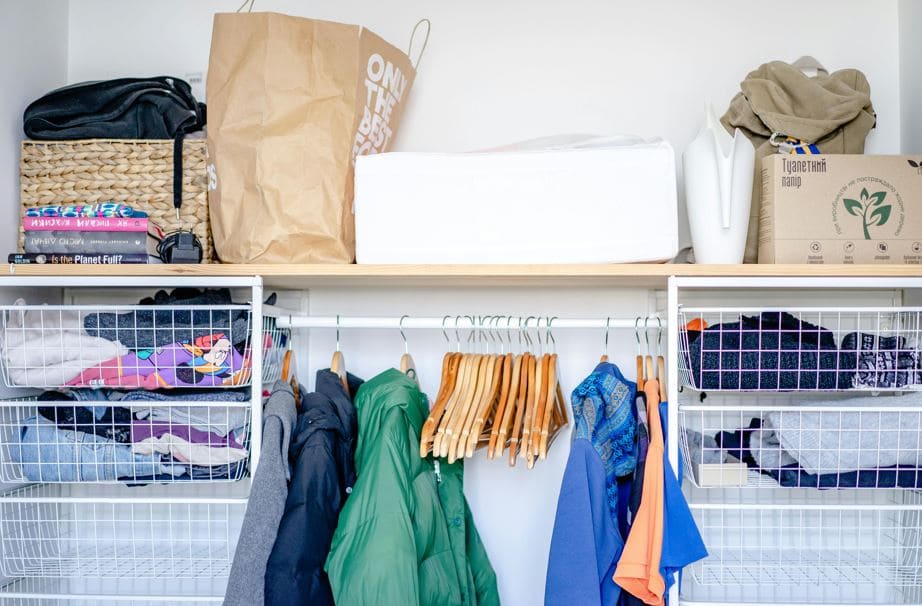
Yet recent critical scholarship warns that this moral framing carries hidden assumptions and exclusions. A 2025 article examining capsule wardrobe discourse on social media argues that the movement “feminizes minimalist aesthetics and aestheticizes self-restraint,” turning what could be a practical strategy into a morally charged performance of virtuous femininity (ARASOC, 2025). The aestheticized capsule—photographed against white walls, organized in matching hangers, color-coordinated in soothing neutrals—becomes aspirational content, a lifestyle ideal that blends consumption reduction with consumption of a particular kind.
This is the paradox at the heart of capsule culture: it preaches less while often requiring more. More expensive items that last. More closet space to display them beautifully. More time to curate, photograph, and share. More cultural capital to read timeless quality as superior to fashionable novelty. The elegance of restraint, it turns out, has a price tag.
The Economics of Quality Over Quantity
The capsule wardrobe philosophy rests heavily on the mantra “buy less, buy better.” Instead of twenty cheap tops, invest in five excellent ones. Replace disposable with durable. Choose natural fibers, classic cuts, neutral palettes, and construction quality that justifies higher upfront costs through longevity.
Martin and Woodhead’s research confronts this ideal with uncomfortable questions about access. They note that capsule discourse often idealizes “perfect minimalist wardrobe spaces” while ignoring “issues regarding who has the pecuniary means to embrace the quality over quantity narrative” (Martin & Woodhead, 2022). A $300 cashmere sweater may cost less per wear over ten years than ten $30 sweaters replaced annually—but only if you have $300 to spend on a single garment in the first place.
This economic barrier is particularly salient in the American context, where income inequality has widened dramatically over recent decades. For many households, the capsule wardrobe’s elegant minimalism is simply not accessible. Fast fashion exists not primarily because consumers are foolish or wasteful, but because it provides affordable variety to people whose budgets cannot absorb investment pieces. When your body size fluctuates, when your professional life is precarious, when you need interview clothes today rather than heirloom garments for a decade—the capsule ideal becomes impractical if not insulting.
We see echoes of this dynamic in other arenas of American aspiration. Much like the unflashy habits of wealth-builders we’ve examined, capsule elegance is often most achievable by those who already possess economic security. The restraint is real, but it rests on a foundation of choice rather than constraint.
Gendered Minimalism and the Labor of Less
The critical literature on capsule wardrobes emphasizes that this is not a gender-neutral practice. Although men certainly participate in wardrobe minimalism, the dominant discourse—especially on Instagram, Pinterest, and fashion blogs—is overwhelmingly feminine. The 2025 analysis argues that capsule culture feminizes minimalist aesthetics, coding restraint, curation, and aesthetic self-discipline as particularly feminine virtues (ARASOC, 2025).
This gendering matters because it connects capsule wardrobes to longer histories of regulating women’s consumption and appearance. Women are encouraged to restrain their desires, to curate rather than accumulate, to perform effortless elegance that is in fact the product of significant emotional and aesthetic labor. The capsule wardrobe becomes another site where women demonstrate their capacity for self-control, their evolved taste, their ability to do more with less—all while looking polished, put-together, and appropriately feminine.
The praise for “simple, timeless, and classic” looks also carries implicit judgments about what fashion excess looks like, and who embodies it. Flashy colors, bold patterns, trend-following, and visible consumption are positioned as aesthetically and morally inferior to the capsule’s muted sophistication. This hierarchy is not ideologically neutral; it often maps onto class, race, and cultural background, privileging Eurocentric norms of restraint and “good taste” over other aesthetic traditions.
For American women navigating workplace dress codes, social expectations, and the persistent demand to look professionally polished without apparent effort, the capsule wardrobe offers both solution and burden. It promises to simplify the complex calculus of appropriate femininity while simultaneously adding another layer of aspiration to achieve.
What the Research Reveals About Daily Practice
Beyond the discourse and ideology, what does capsule wardrobe living actually look like day-to-day? The University of Minnesota study offers granular insight through participant journals and interviews. People described developing new relationships with their clothing—noticing quality, fit, and versatility in ways that rapid consumption had obscured. They reported feeling more present in getting dressed, treating it as a creative practice rather than a rushed chore (University of Minnesota, 2019).
The constraint forced attention to proportion, layering, and accessorizing as sources of variation. A simple white shirt became not generic but foundational—capable of being dressed up with tailored trousers, dressed down with jeans, layered under sweaters, or worn alone with statement jewelry. This kind of compositional thinking, participants noted, felt more skilled and intentional than scrolling through online retailers for the next dopamine hit of newness.
Yet the study also captured moments of frustration and desire. Special occasions presented challenges: weddings, job interviews, formal events that seemed to demand something beyond the capsule’s scope. Seasonal transitions were difficult, requiring advance planning and sometimes temporary expansions. And the sheer repetition, while freeing for some, felt claustrophobic to others who genuinely enjoyed fashion variety as creative expression and pleasure.
These tensions reveal that capsule wardrobes are not a universal solution but a particular practice suited to particular lives, values, and circumstances. They work best for people whose daily routines are relatively stable, whose professional environments are somewhat flexible, who find aesthetic satisfaction in refinement rather than novelty, and who possess both the economic means and the cultural confidence to invest in fewer, better pieces.
The Digital Performance of Restraint
Much of contemporary capsule wardrobe culture lives on social media, where the practice becomes both personal and performative. Instagram accounts dedicated to capsule living showcase meticulously photographed closets, seasonal rotation strategies, and outfit formulas. YouTube channels document decluttering journeys and capsule building processes. Pinterest boards collect “timeless,” “classic,” and “versatile” pieces for aspiring minimalists to emulate.
This digital presence has amplified capsule wardrobes’ reach while also transforming their meaning. What might have been a private practice of consumption reduction becomes public content, complete with affiliate links, sponsorships, and aesthetic branding. The irony is not lost on critics: restraint itself becomes a commodity, something to be marketed, consumed, and performed for an audience (ARASOC, 2025).
For American audiences scrolling through these feeds, capsule content offers both inspiration and inadequacy. The gleaming white closets, the perfectly coordinated palettes, the effortless-looking elegance—all establish new standards of what mindful consumption should look like. The accessibility promised by “just thirty-three items” gets complicated when those items cost thousands of dollars and the closet itself requires professional organization systems and abundant space.
Yet social media also provides genuine community and practical guidance. People share budget-friendly strategies, thrift store finds, and honest accounts of what works and what doesn’t. The performative aspects coexist with authentic support networks and real exchanges of knowledge. As with much digital culture, capsule wardrobes on social media contain both aspirational mythology and practical solidarity.
Capsule Wardrobes in American Consumer Culture
To understand capsule wardrobes’ cultural resonance in the United States, we must situate them within broader contradictions of American life. This is a society that celebrates individual expression and visible success while also producing periodic backlashes against materialism and excess. Minimalism, voluntary simplicity, and anti-consumption movements recur throughout American history, from Thoreau’s Walden to 1970s counterculture to contemporary tiny house enthusiasts.
The capsule wardrobe slots neatly into this tradition of aspirational restraint. It allows Americans to signal sophistication, environmental consciousness, and evolved values without fundamentally challenging consumer capitalism. You’re still buying—just buying better. You’re still curating an identity through possessions—just fewer, more carefully chosen ones. The system remains intact; only the strategy changes.
This compatibility with market logic explains both the appeal and the limitations of capsule culture. It offers individual solutions to structural problems: buy quality instead of demanding living wages for garment workers; curate your closet instead of regulating polluting industries; express restraint instead of questioning why fashion cycles accelerate relentlessly. The elegance achieved is real, but it operates within rather than against the forces driving overconsumption.
At the same time, individual practices can accumulate into cultural shifts. If enough Americans genuinely reduce their clothing purchases, demand better quality, and wear items longer, market incentives could eventually shift. Capsule wardrobes may be most powerful not as complete solutions but as entry points—practical ways for individuals to begin questioning their relationships with consumption, fashion, and identity in a culture that makes those questions difficult to ask.
The Unseen Infrastructure of Elegant Simplicity
One aspect largely absent from capsule wardrobe discourse but crucial to understanding its practice: the hidden infrastructure that makes minimalism possible. A capsule wardrobe assumes reliable laundry access, climate-controlled storage, and the ability to maintain high-quality garments properly. Dry cleaning, alterations, repairs, stain removal, proper storage—all require time, money, and knowledge.
In American cities where many people rely on laundromats, where closet space is minimal, where professional cleaning is expensive, the capsule ideal becomes harder to sustain. A white linen shirt is timeless and versatile—until you spill coffee on it and lack easy cleaning access. Cashmere requires careful storage to prevent moth damage. Leather shoes need rotation and maintenance. The elegance of restraint depends on an invisible support system that is itself a form of privilege.
This infrastructural dimension connects to broader questions about invisible systems shaping our daily lives—the taken-for-granted arrangements that enable certain lifestyles while excluding others. Capsule wardrobes work best when embedded in stable, resource-rich contexts that allow for the care and maintenance that quality items require.
Practical Wisdom for American Readers
For those considering capsule wardrobes, the research suggests several evidence-based principles. First, start experimentally rather than ideologically. Try a seasonal capsule or a thirty-day challenge before committing to permanent reduction. The University of Minnesota study shows that the experience of living with constraints is different from imagining it—you may discover unexpected pleasures or deal-breaker frustrations (University of Minnesota, 2019).
Second, define your own parameters rather than adopting prescriptive rules. Thirty-three items works for some lives and not others. What matters is the intentional limitation and coordination, not the specific number. Your capsule should reflect your actual life—your climate, profession, hobbies, social obligations—not an idealized version of someone else’s existence.
Third, resist the quality-über-alles pressure if it doesn’t match your economic reality. A capsule wardrobe built slowly from thrift stores, secondhand purchases, and budget-friendly basics can work as well as one composed of investment pieces. The elegance comes from coordination, fit, and care, not price tags. Don’t let the perfect become the enemy of the functional.
Fourth, examine your motivations honestly. Are you drawn to capsule wardrobes because you genuinely want reduced decision-making and consumption? Or because you think you should want those things? Because Instagram makes minimalism look aspirational? Because you’re trying to solve other life problems through wardrobe control? The practice works best when it aligns with your actual values and needs, not imposed ideals.
Fifth, anticipate the social and emotional dimensions. Outfit repetition may feel uncomfortable initially, especially in professional settings. You might need to develop language for explaining your choices if colleagues comment. You might experience FOMO when trends emerge or friends share shopping hauls. These responses are normal in a culture that equates newness with vitality; they don’t mean you’re doing it wrong.
Finally, stay flexible and self-compassionate. Life changes—bodies, jobs, climates, interests. A capsule wardrobe should adapt, not constrain. If a strict thirty-three items feels punishing rather than freeing, adjust. If you need to expand for a life transition, expand. The goal is greater intentionality and satisfaction, not rigid adherence to arbitrary rules or others’ expectations.
Looking Forward: Capsule Culture in 2026 and Beyond
As we move deeper into 2026, several trends suggest capsule wardrobes will continue evolving within American consumer culture. Growing climate consciousness, particularly among younger generations, makes consumption reduction increasingly mainstream rather than countercultural. The economic pressures of inflation and stagnant wages push more Americans toward durable goods and fewer purchases regardless of ideological commitment. And the fatigue with fast fashion’s quality decline creates openings for different consumption models.
At the same time, the forces driving overconsumption remain powerful: social media’s constant visual stimulation, algorithmic targeting that makes purchasing frictionless, the psychological comfort of retail therapy, and structural economic dependence on consumer spending. Capsule wardrobes exist in tension with these dynamics, offering individual strategies without resolving systemic contradictions.
The most thoughtful capsule practitioners recognize this tension. They embrace the practice for its personal benefits—reduced decision fatigue, clearer style, alignment with values—while remaining aware of its limitations as social change. They resist the moralizing that positions capsule minimalism as superior to other approaches, understanding that different lives require different strategies and that true elegance includes humility about one’s own choices.
Research directions for the coming years should address current gaps: quantitative studies measuring actual consumption changes among capsule adopters; intersectional analyses examining how race, class, body size, and geography shape access and experience; longitudinal work tracking whether capsule practices persist or fade; and comparative research exploring how capsule culture operates in different national contexts beyond Western, middle-class populations.
The Deeper Meaning of Restraint
Ultimately, capsule wardrobes matter less for what they are—a specific number of clothing items—than for what they represent: an attempt to find elegance, meaning, and freedom through deliberate limitation in a culture of relentless abundance. The practice resonates because it addresses real problems: decision fatigue, environmental guilt, cluttered spaces, the exhausting treadmill of trend-following, the disconnect between stated values and daily actions.
Whether capsule wardrobes deliver on their promises depends enormously on individual circumstances, motivations, and contexts. For some Americans, they provide genuine liberation—simpler mornings, clearer style, reduced consumption, greater alignment between closet and conscience. For others, they add another layer of aspiration and potential failure to already complex lives. For still others, they remain inaccessible dreams, appealing in theory but impossible given economic realities or life circumstances.
The elegance of restraint, then, is real but partial, available but conditional, liberating but also demanding. It works best not as universal prescription but as one tool among many for navigating the peculiar challenges of contemporary American consumer culture—where we have more clothing than ever before and less certainty about how to dress, where abundance produces anxiety as often as satisfaction, and where the simple act of getting dressed each morning can feel like a complex negotiation between self-expression, social expectation, ethical commitment, and practical constraint.
In examining capsule wardrobes rigorously, we find not a simple solution to fashion’s excesses but a revealing mirror of American contradictions: our simultaneous desires for more and less, novelty and stability, individual expression and collective responsibility, market freedom and meaningful restraint. The practice illuminates these tensions without resolving them—which may be, in the end, its most valuable contribution.
Frequently Asked Questions
Continue Exploring Intentional Living
At B Red Magazine, we examine the cultural forces shaping American life—from consumption patterns to wealth-building strategies to the invisible systems structuring our choices. Capsule wardrobes represent one intersection of these themes: where personal style meets consumer ethics, where restraint becomes aspiration, and where individual practices reflect broader cultural contradictions.
Explore related perspectives: the unflashy habits that build real wealth, the quiet power of compound returns, and more thoughtful analysis of how Americans navigate abundance, restraint, and meaning in daily life.
At B Red Magazine, we continue tracking how minimalist movements intersect with American consumer culture, environmental consciousness, and evolving definitions of elegance and success. For more in-depth cultural analysis and forward-thinking perspectives on lifestyle, business, and the forces shaping contemporary American life, explore our archives at bredmagazine.com.